
In today’s fast-paced business landscape, staying ahead of the competition and achieving sustainable growth requires more than just a good product or service. This is where Revenue Growth Management (RGM) comes into play. RGM is a strategic approach that focuses on maximizing revenue through careful planning, analysis, and execution. The concept of commercial growth management has been put into practice since the 1950s, particularly within the aviation industry. However, implementing the right RGM strategy that drives profit is challenging. It has been recorded that around 75% of RGM programs do not drive profit for either the retailer or the manufacturer.
In this article, we’ll dive deep into the art of RGM, exploring its core principles, tools, techniques, and real-world applications to help you achieve maximum impact in your business.
Understanding Revenue Growth Management (RGM)
Definition of RGM
(RGM) is a comprehensive approach that involves strategic planning and execution to optimize revenue streams. It encompasses various elements, including market segmentation, pricing & promotional strategies, trade promotion optimization, and other activities aimed at enhancing a company’s revenue growth.
This is done by optimization of 5 levers:
· Pricing
· Promotions
· Price Pack Architecture
· Trade Terms
· Distribution Mix
This optimization aids businesses in delivering the right product, place, price, and promotion with the best profit margin. So what do each of these 5 levers actually mean?
The 5 Levers of Revenue Growth Management
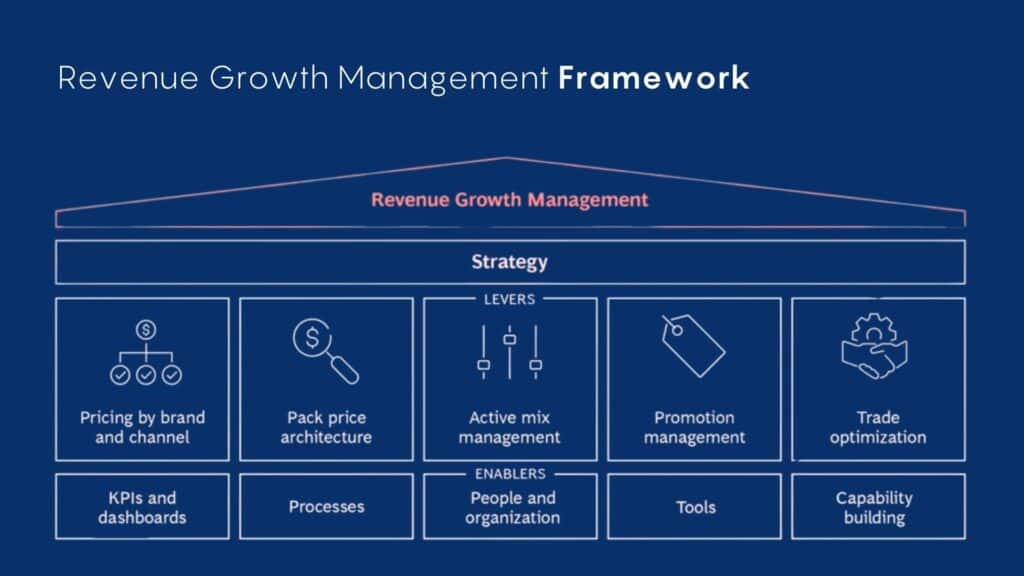
1. Pricing
The first lever to put into consideration is pricing. It is the decision that every revenue manager or price manager has to take, even if they manage a sole product and can’t use promotions. Pricing strategies vary, including methods like cost-plus, competitive, and price-elasticity-based.
2. Price Pack Architecture (PPA)
PPA, or price pack architecture, points to designing and structuring product portfolios focusing specifically on packaging sizes and price points. This helps manufacturers segment their brands relying on the product portfolio and dive into distinct shopping sensitivities.
3. Promotions
The 3rd lever of RGM drives short-term sales, strategically improving brand visibility, motivating product trials, and encouraging repeated purchases through incentives that are value-based and targeted prices. It is essential to consider the short- and long-term implications of promotions.
4. Product Mix
Portfolio optimization ensures meeting customer demand and varied consumer preferences by fusing the correct product, price, promotion, and distribution strategy for each unique retailer. As a consequence, there is greater market penetration, improved customer satisfaction, retention, and maximum profitability across segments.
5. Trade Terms
Trade terms are a lever between the manufacturer and retailer. This lever allows mutually beneficial agreements that work as an incentive for distributors to prioritize your products. When done correctly, clear and strategic trade terms and trade promotions drive shelf visibility, sales velocity, and ensure balanced margins through optimizing price, promotion, and distribution strategies.
Key Components of RGM
There are many components for commercial growth management. These are the most prominent:
- Strategic Planning Across Departments: Developing a clear plan that aligns with the company’s overall objectives. Cross-functional collaboration across different disciplines like marketing and sales ensures a higher probability of achieving business goals.
- Data-Driven Decision Making: Utilizing data and analytics to inform strategies and decisions. These can be insights about consumer behavior, competition, and overall market trends.
- Customer-Centric Approach: Focusing on the needs and preferences of customers to drive growth, which improves customer retention and customer loyalty, resulting in overall improvement in profit and sales.
- Market Segmentation: Identifying and targeting specific market segments to maximize revenue. This is done by segmenting customers and channels based on buying behaviour, price sensitivity, and brand loyalty. Additionally, tailoring strategies for varied segments improves relevance and engagement.
- Promotional Effectiveness:
Analysis of promotional activities in the past to decipher their efficiency in terms of sales volume, profitability, and market share. Making sure that the spend on promotion is optimized guarantees return on investment and promotion effectiveness. Additionally, leveraging techniques like cannibalization analysis, incremental sales measurement, and lift analysis.
Tools and Techniques for RGM
Data Analytics Tools
Data analytics tools are indispensable for RGM. They help businesses collect, process, and analyze large volumes of data to uncover valuable insights. Popular tools include Google Analytics, Tableau, and Power BI. These tools are various, but the most popular are predictive analytics, prescriptive analytics, and descriptive analytics.
Pricing Optimization
Pricing optimization involves setting the right price for products or services to maximize revenue. This can be achieved through various techniques such as dynamic pricing, value-based pricing, and competitive pricing.
Promotion Strategies
Effective promotion strategies are key to driving revenue growth. This includes utilizing various marketing channels, running targeted campaigns, and offering promotions or discounts to attract and retain customers.
Implementing RGM in Your Business
Steps to Get Started in implementing revenue growth management
- Assess Current Revenue Streams: Evaluate your existing revenue streams to identify areas for improvement.
- Set Clear Objectives: Define your revenue growth goals and establish KPIs to measure success.
- Develop a Strategy: Create a comprehensive RGM strategy that aligns with your business objectives.
- Build a Dedicated RGM Team: Assemble a team of experts to oversee the implementation and execution of your RGM strategy.
Building a Dedicated RGM Team

A successful RGM implementation requires a dedicated team with diverse skill sets. This team should include members with expertise in data analysis, marketing, sales, and finance to ensure a holistic approach to revenue growth. To ensure that you build this dedicated team, there are certain questions to ask:
- Where should RGM be?
It is essential that you ask where the RGM will be. Is it across finance, marketing, sales, or a standalone department? - Who should RGM report to?
Is it to leadership positions (CEOs, CFOs, etc.)? Is it for marketing and sales? Or through a hybrid approach? - What skillsets are required?
Do the ones hired need to have cross-functional communication skills, analytical skills, and operational execution?
Challenges in RGM
Common Obstacles
- Data Quality: Ensuring the accuracy and reliability of data can be challenging. This is due to siloed data across systems. Data quality is critical for making correct decisions. For siloed data, centralized platforms aid in gaining holistic insights from various touchpoints.
- Resistance to Change: Employees may be resistant to adopting new strategies and tools. It is a human instinct to resist change, so it is vital to communicate with your team about the many benefits of revenue growth management and discuss any concerns or thoughts that they might have regarding the concept.
- Resource Constraints: Limited resources can hinder the implementation of RGM initiatives.
How to Overcome Them
- Invest in Data Management: Implement robust data management practices to ensure data quality.
- Change Management: Foster a culture of innovation and continuous improvement to overcome resistance to change.
- Allocate Resources Wisely: Prioritize RGM initiatives and allocate resources effectively to support implementation.
- Assure Balance Between Short-Term & Long-Term Goals:
The whole idea of revenue growth management is to ensure sustainable growth. However, it is easy to be short-sighted and focus on the goals that are short-term. Hence, it is paramount to balance short-term goals and long-term goals to ensure sustainable growth.
Case Studies of Successful RGM
Company A: Transforming Revenue Streams
Company A implemented an RGM strategy that focused on market segmentation and pricing optimization. By targeting specific customer segments with tailored pricing strategies, they achieved significant revenue growth and improved customer satisfaction.
Company B: Innovative RGM Approaches
Company B adopted innovative RGM approaches, including advanced data analytics and personalized marketing campaigns. These efforts resulted in increased market share and enhanced brand loyalty.
Measuring Revenue Growth Management Success
After implementing different commercial growth management strategies, it is of course crucial to measure success. This can be done by tracking the right KPIs and reporting on results to make adjustments and assess impact. To measure your success, you can:
- Track Reporting Consistently
It is necessary to pinpoint how often you will review your revenue growth management efforts. Quarterly or monthly reviews often do the drill; however, at times it can be essential to monitor your efforts and adjust according to your business needs. - Data Visualization
Using visual elements like charts and graphs to visualize the impact over time. By visualization, you spot trends and identify areas for enhancements. - Sharing Results With Stakeholders
It is essential to communicate the RGM results with key stakeholders, including the sales team and executive team. This is essential and helpful as it keeps everyone informed and updated with progress. This effective communication allows easier and smoother cross-functional teamwork and communication.
The Future of Revenue Growth Management
Emerging Trends
The future of RGM is shaped by emerging trends such as artificial intelligence (AI), machine learning (ML), and automation. These AI-enhanced tools enable more precise data analysis, predictive modeling, and real-time decision-making.
The Role of Technology
Technology plays a pivotal role in the evolution of RGM. From advanced analytics platforms to AI-driven insights, technology empowers businesses to optimize their revenue strategies and stay ahead of the competition.
Revenue Growth Management (RGM) is a powerful approach for maximizing revenue and achieving sustainable growth. By understanding its core principles, leveraging data-driven tools, and implementing effective strategies, businesses can unlock new revenue opportunities and drive long-term success. Embrace the art of RGM and take your business to new heights.
In conclusion, implementing the right revenue growth management strategies and methodologies and optimizing these efforts across all the 5 levers ensure maximum profit and business success.