

How Agile Data, Precision Price Testing, and In-Campaign Analytics Transform Peak Promotional Seasons into Predictable Margin Generators.
Black Friday and the extended Q4 shopping period, often celebrated across the MENA region as “White Friday”, represent the most lucrative window on the retail calendar. In peak promotional seasons, consumer spending consistently surges into hundreds of billions of dollars globally. For brand managers, trade marketers, and retail strategists, this high-stakes window offers immense revenue potential, paired with severe competitive intensity.
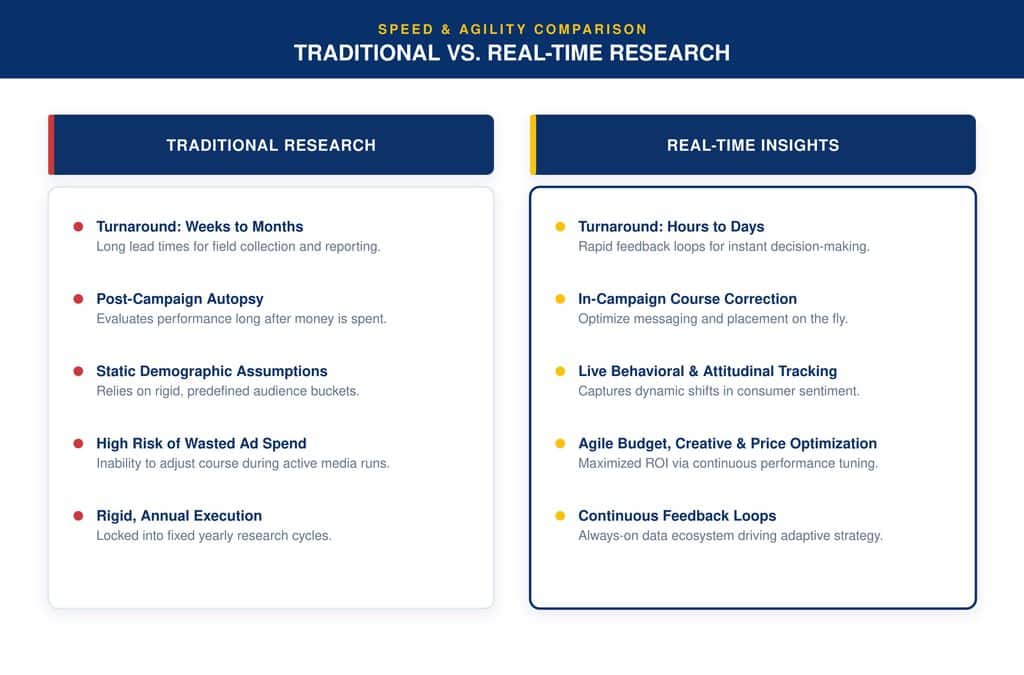
With thousands of brands vying for consumer attention simultaneously, reliance on traditional, slow-moving market research during peak promotional windows is a distinct liability. By the time a classic post-campaign survey is processed, the shopping season is over, ad budgets are spent, and unearned market share has shifted to agile competitors.
To maximize promotional profitability and navigate unpredictable consumer dynamics, modern enterprises must embed real-time insights into their core decision-making frameworks.
4 Commercial Barriers to Black Friday Success (And How Real-Time Data Overcomes Them)
Winning during high-volume shopping festivals requires overcoming four primary commercial friction points.
1. Rapidly Shifting Consumer Price Elasticity
Economic factors, inflationary pressures, and evolving household budgets mean consumer sensitivity to pricing fluctuates hour-by-hour during shopping events. A discount structure that resonated two weeks before Black Friday may lose traction as competitor price drops go live.
- The Real-Time Advantage: Live price-testing and dynamic feedback allow brands to monitor elasticity in real time, ensuring promotions remain attractive without destroying net margins.
2. High Channel Fragmentation & Short Attention Spans
Modern shoppers navigate fluidly between social media storefronts, e-commerce applications, and physical retail aisles, frequently checking price comparisons on their mobile devices while standing in front of a store display.
- The Real-Time Advantage: Immediate creative and messaging validation ensures your value proposition cut through digital noise across all active touchpoints.
3. Inventory Misalignment & Out-of-Stock Risk
Misjudging product demand during peak promotional surges leads to two costly outcomes: stockouts on high-demand items (losing immediate revenue) or excess inventory on low-performing SKUs (forcing severe margin-eroding clearance sales).
- The Real-Time Advantage: Rapid feedback loops enable supply chain and commercial teams to reallocate promotional push behind SKUs that demonstrate immediate organic traction.
4. High Customer Acquisition Costs (CAC)
Ad inventory costs (CPMs and CPCs) spike dramatically across digital advertising platforms during Q4. Running unoptimized marketing copy or targeting the wrong value triggers burns capital at an accelerated rate.
- The Real-Time Advantage: Rapid A/B testing of promotional messages before scaling ad spend ensures every dollar invested converts high-intent shoppers.
The Strategic Core: How Real-Time Insights Fuel Promotional Agility
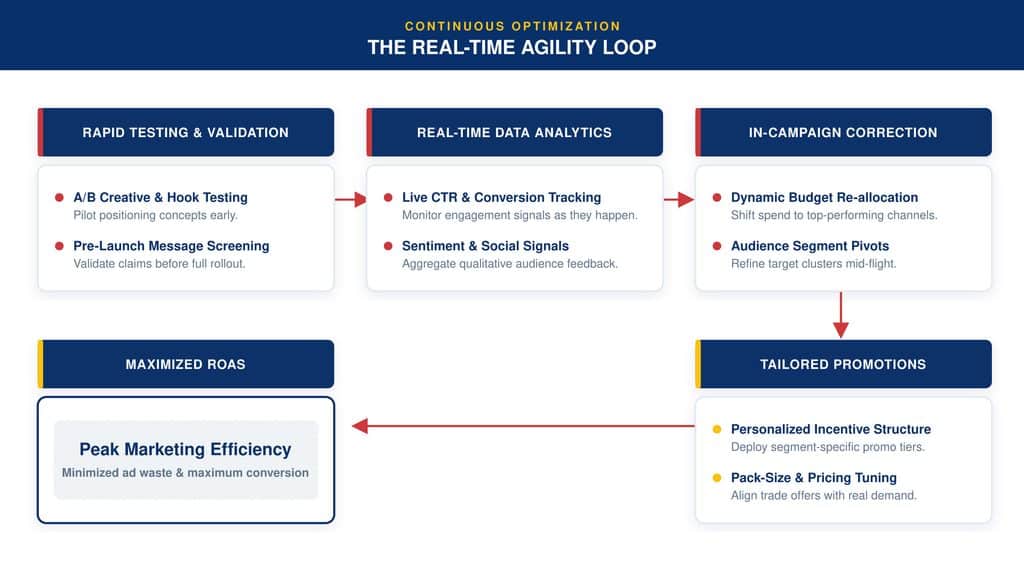
Integrating real-time market data into your Black Friday commercial strategy yields three core operational advantages:
1. Rapid Response to Market Dynamics
Instead of relying on historical guesswork or waiting weeks for panel surveys, real-time insights provide immediate clarity on shifting consumer preferences. If a key competitor launches a surprise bundle offer or a specific product variant begins trending unexpectedly, real-time analytics allow your commercial team to pivot strategies within hours, protecting your market share and baseline sales volume.
2. Proactive Friction Elimination & Enhanced Customer Experience (CX)
Customer experience during high-volume events dictates long-term brand loyalty. Research shows that a seamless shopping experience builds lasting equity, whereas friction during checkout causes immediate basket abandonment.
By gathering live feedback on customer friction points, such as confusing promotional mechanics, slow digital checkouts, or unclear product specifications, brands can identify and resolve operational bottlenecks before they turn into abandoned carts and negative reviews.
3. Precision Optimization of Promotions & Product Offerings
Real-time research transforms promotional planning into an empirical science. Commercial teams can rapidly test different incentive structures (e.g., flat percentage discounts vs. multi-buy bundles vs. value-add gifts) to uncover which specific mechanic drives higher average order values (AOV) and stronger margin contributions across different shopper segments.
Scaling Your Architecture with Modern Insights Platforms
To support rapid decision-making during fast-moving promotional periods, enterprise analytics must bridge the gap between internal sales data and external consumer sentiment.
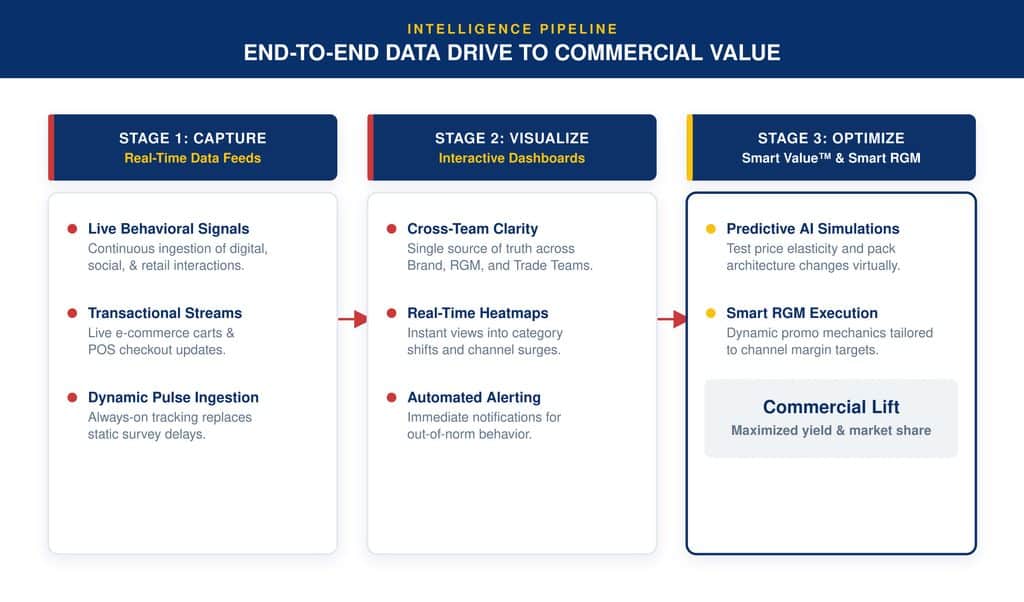
By deploying advanced solutions like the Smart Value™ Platform powerd by Marketeers Research, commercial teams can:
- Unify Disparate Streams: Centralize point-of-sale (POS) data, digital marketing analytics, and consumer feedback into a single, real-time source of truth.
- Simulate Market Scenarios: Run predictive “What-If” market simulations to evaluate how price adjustments or trade spend reallocations will impact net profitability before executing them on the retail shelf.
- Optimize Trade Terms: Utilize empirical shopper data to strengthen Joint Business Planning (JBP) negotiations with major retailers, proving how your promotional strategy drives total category growth.
Practical Action Plan: 4 Steps to Prepare for Peak Seasons
To ensure your brand is fully equipped to leverage real-time insights during the next major shopping event, execute this strategic checklist:
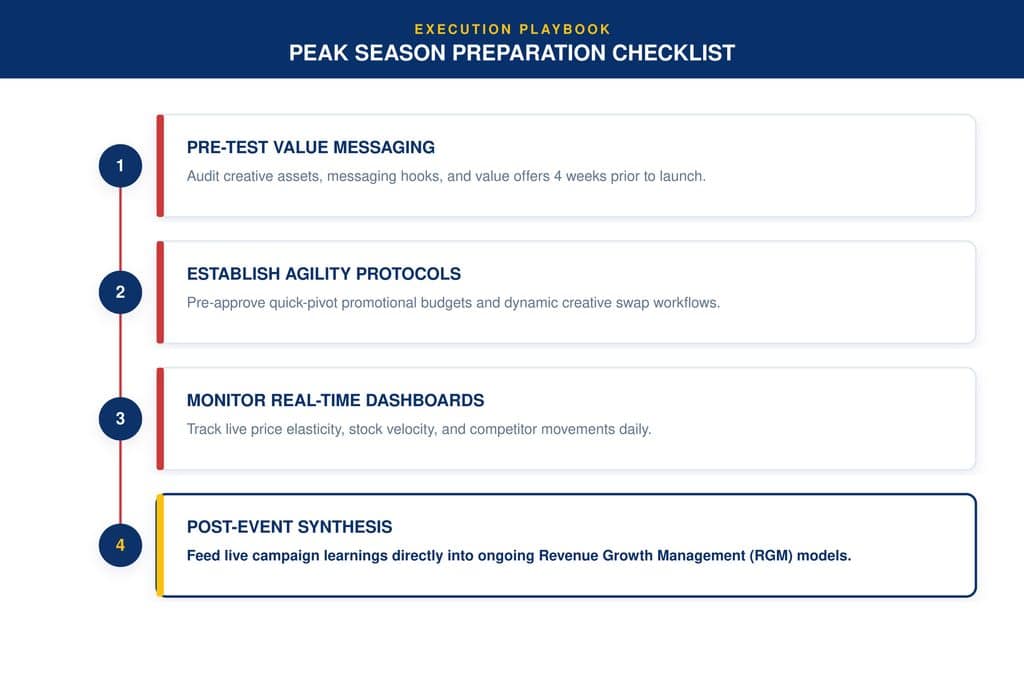
- Audit and Pre-Test Core Messaging (4–6 Weeks Out): Run rapid concept-testing on your headline offers, promotional structures, and creative assets well before the peak shopping period begins to identify clear winning variations.
- Establish Agile Decision Protocols: Create cross-functional task forces (combining Marketing, Sales, Finance, and Supply Chain) with pre-approved authority to adjust digital spend and promotional mechanics on the fly based on live data triggers.
- Deploy Live Analytical Dashboards: Set up automated reporting streams that track real-time price elasticities, channel conversion rates, and stock velocity to catch emerging issues immediately.
- Feed In-Campaign Learnings into Long-Term RGM: Treat peak promotional periods as rich learning laboratories. Capture real-time behavioral data during the rush and integrate those insights directly into your overarching Revenue Growth Management (RGM) architecture for long-term portfolio optimization.
Related Strategic Resources
To further refine your seasonal promotional strategy and commercial architecture, explore these guides from the Marketeers Research Knowledge Hub:
- Optimize Promotional Strategy: Read our breakdown on The Art of Revenue Growth Management (RGM) for Maximum Impact to master price pack architecture and trade terms.
- Understand Consumer Drivers: Explore What a Usage & Attitude Study Actually Tells You About Consumers to align seasonal messaging with deep behavioral motivations.
- Overcome Market Barriers: Discover key strategies in Brand Growth Strategies: Navigating Market, Consumer, and Pricing Barriers.
Transform Your Seasonal Performance Today
Don’t enter high-stakes promotional seasons relying on historical guesswork or outdated assumptions. Secure your competitive edge, bulletproof your customer experience, and maximize your profit margins with data-driven commercial clarity.
👉 Ready to future-proof your commercial strategy? Connect with the experts at Marketeers Research today to explore our advanced insights and Smart Value™ solutions.