

How Integrating Data Centralization, Real-Time Decision Engines, and Operational Agility Builds Resilient Enterprise Architecture.
The modern commercial landscape operates in a state of continuous disruption. Escalating supply chain complexities, rapid technological shifts, macroeconomic volatility, and changing consumer expectations have dismantled traditional corporate playbooks. Long-term strategic planning can no longer rely on static annual forecasts or historical assumptions.
To survive and build sustainable competitive advantages, mid-market enterprises and global brands must execute a fundamental organizational pivot. Enterprise transformation is no longer an optional multi-year initiative; it is an ongoing operational discipline.
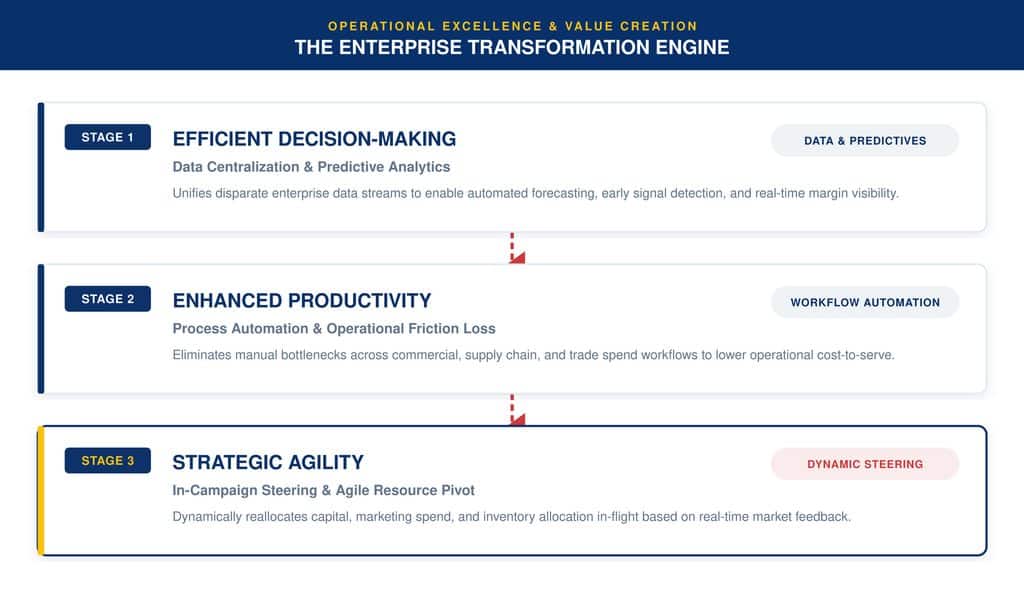
At the core of successful enterprise adaptation lie three interconnected operational pillars: Efficient Decision-Making, Enhanced Productivity, and Strategic Agility. When aligned, these pillars form a decision engine capable of navigating market turbulence, protecting profit margins, and driving scalable growth.
Pillar 1: Efficient Decision-Making via Data Centralization
In fast-moving commercial environments, decision efficiency determines market share. Making the right strategic choice weeks after a market shift occurs carries the same practical cost as making the wrong decision entirely.
Human decision-making is naturally vulnerable to cognitive biases—such as status quo bias, sunk cost fallacy, and confirmation bias. According to research published by the Harvard Business Review, implementing structured decision hygiene and centralized data platforms significantly reduces executive noise, shifting leadership discussions away from subjective debate toward data-backed consensus.
Transitioning from Retrospective Analysis to Predictive Analytics
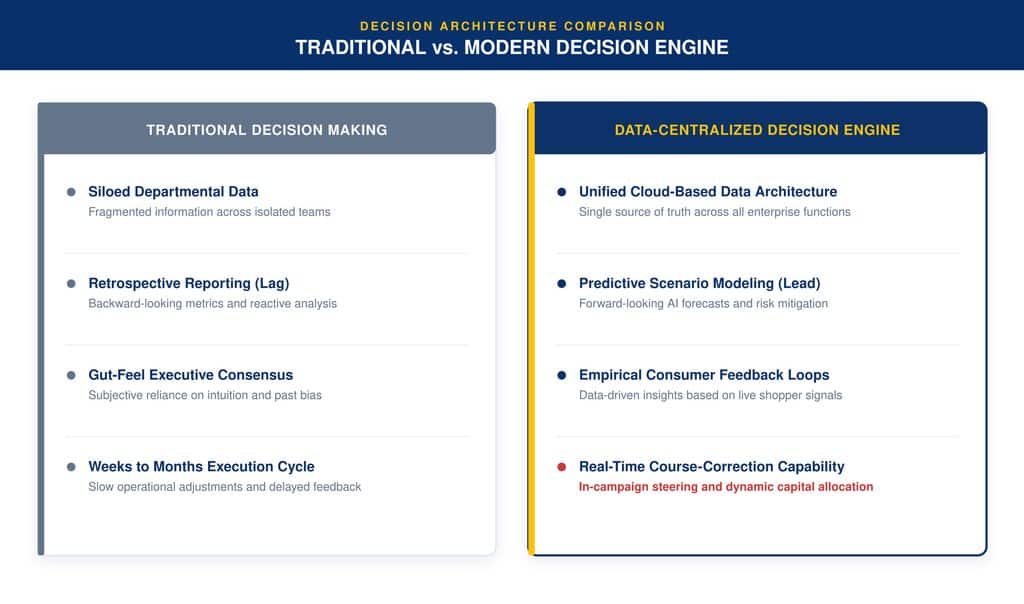
Historically, business intelligence focused on post-mortem reporting—analyzing last quarter’s sales drop or last month’s margin erosion. Modern enterprise decision-making leverages predictive analytics and machine learning to forecast outcomes before capital is committed.
By modeling “What-If” market scenarios, commercial teams can evaluate how price-pack architecture adjustments, trade promotion spend shifts, or supply chain disruptions will impact revenue and volume before rollouts take place.
Mitigating Cognitive Biases
Human decision-making is naturally vulnerable to cognitive biases—such as status quo bias, sunk cost fallacy, and confirmation bias. Establishing centralized, objective data platforms creates a single source of truth across sales, finance, and marketing departments. This empirical clarity shifts leadership discussions away from subjective debate and toward data-backed consensus.
Pillar 2: Enhanced Productivity and Process Optimization
Manual data aggregation, routine spreadsheet consolidation, and delayed approval chains drain organizational velocity. Research by McKinsey & Company reveals that by using social technologies, companies can raise the productivity of knowledge workers by 20% to 25%. knowledge workers spend up to 20% of their work week searching for internal information and tracking down data. Implementing intelligent workflow automation—ranging from automated inventory replenishment triggers to centralizing consumer panel reporting—frees operational teams to tackle strategic execution.
Leveraging Automation for High-Value Focus
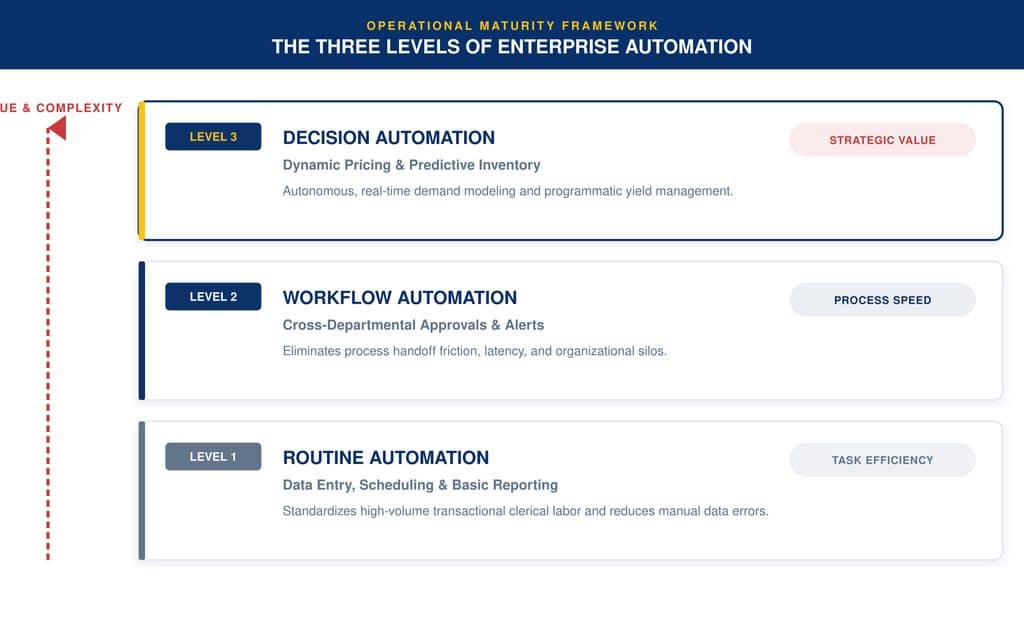
Manual data aggregation, routine spreadsheet consolidation, and delayed approval chains drain organizational velocity. Implementing intelligent workflow automation—ranging from automated inventory replenishment triggers to centralizing consumer panel reporting—frees operational teams to tackle strategic initiatives:
- Eliminating Friction Points: Automated data integration removes human error in cross-channel reporting and reduces meeting preparation cycles.
- Standardizing Core Processes: Replicable digital workflows ensure brand compliance, pricing governance, and inventory management across regional channels.
Supporting High-Performance Workforces
Technology alone does not guarantee output. Sustained enterprise productivity relies on organizational culture and employee enablement. Providing teams with intuitive, real-time analytics tools reduces cognitive fatigue, minimizes burnout, and builds an empowered workplace where cross-functional teams possess the autonomy to solve operational problems.
Pillar 3: Strategic Agility and In-Campaign Steering
The final pillar of enterprise transformation is agility—the structural capacity to pivot strategic resource allocation in response to live market triggers.
In volatile macroeconomic climates, static five-year growth plans fail. Agility requires setting strategic direction while maintaining operational flexibility to adjust tactics based on live performance data.
In-Campaign Course Correction
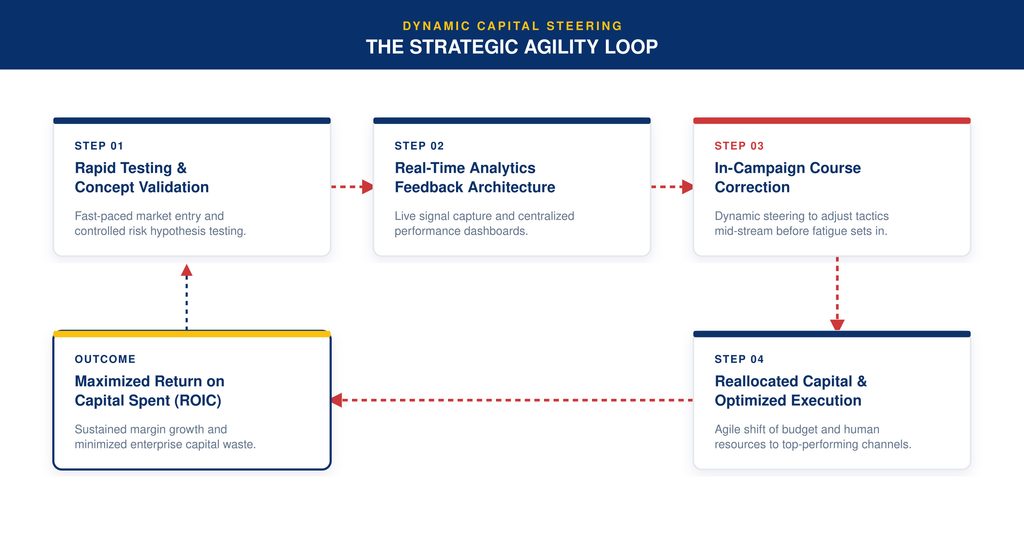
Whether executing a regional Black Friday promotion or launching a new product line extension, agile organizations do not wait for campaign completion to evaluate performance. By monitoring live sales velocity, consumer sentiment, and channel conversion, agile teams reallocate marketing budgets and trade spend during active campaigns—maximizing return on investment (ROI).
Rapid Market Validation
Before rolling out expensive commercial initiatives nationally, agile enterprises validate concepts through micro-market testing. Testing promotional mechanics, packaging claims, or pricing adjustments in controlled digital or retail environments minimizes risk and ensures full-scale launches are backed by proven consumer adoption metrics.
Transform Your Decision Engine with Marketeers Research
Achieving efficient decision-making, enhanced productivity, and strategic agility requires robust analytics architecture. The Smart Value™ Platform from Marketeers Research empowers commercial leaders, brand directors, and revenue growth management (RGM) teams to replace slow, manual analysis with dynamic insight engines.
By unifying cross-departmental data, automating consumer insights, and enabling predictive scenario testing, our platform delivers:
- Centralized Commercial Intelligence: Eliminate data silos across sales, marketing, and trade teams.
- Predictive Scenario Simulation: Test the profit and volume impact of pricing, promotional, and portfolio shifts before execution.
- Agile In-Campaign Adjustments: Monitor real-time consumer feedback loops to optimize marketing spend dynamically.
Related Strategic Resources
Explore additional frameworks and research insights from the Marketeers Research Knowledge Hub:
- Master Commercial Execution: Read Supercharging FMCGs with Tailored Pricing Strategies to master price-pack architecture, value tiering, and margin protection.
- Decode Consumer Value Perception: Read How FMCGs Tap into Consumers’ Minds with Psychological Pricing to evaluate how shoppers interpret price points and value thresholds.
- Align Revenue Architecture: Explore The Art of Revenue Growth Management (RGM) for Maximum Impact to build end-to-end commercial alignment across pricing, trade spend, and channel distribution.
External Industry Benchmarks & Strategic References
- Review international standards for data analysis and consumer insights methodologies via ESOMAR World Research Standards.
- Examine macroeconomic trends, regional stability indicators, and monetary policy updates on the Central Bank of Egypt Data Center.
Ready to Future-Proof Your Organization?
Don’t let manual reporting routines and data silos slow down your organizational growth. Build a resilient decision engine, empower your workforce, and drive agile commercial execution.
👉 Contact the experts at Marketeers Research today to schedule a demo of our Smart Value™ Platform.